Objective quality assessment
Each pallet is automatically inspected and classified based on defined criteria.
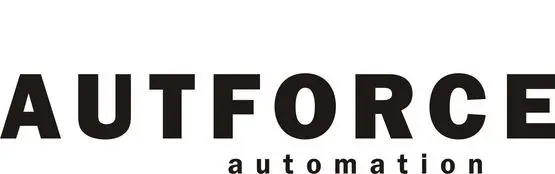
For EDEKA, Germany’s leading food retailer, AUTFORCE developed a fully automated pallet sorting machine for the efficient sorting of empty pallets as part of the pooling return process. The goal was to reliably identify mixed pallet streams, classify them by type and quality, and automatically sort them onto the respective output lanes.
In addition to type recognition, signs of wear, soiling, damage, and geometric deviations should be automatically evaluated in accordance with the EPAL quality classification. The quality criteria and threshold values for the individual pallet classes were defined in collaboration with the customer. The system developed combines automated sorting with integrated quality inspection and achieves a throughput of up to 200 pallets per hour. Sorting is performed automatically across seven output lanes, with pallets separated by type and quality class.
Translated with DeepL.com (free version)
Technical Challenge: Color- and Type-Based Classification
A key challenge of the project was reliably distinguishing between IPP pallets (burgundy) and EPAL-2B pallets (dark brown). This task had already been analyzed in advance as part of a feasibility study.
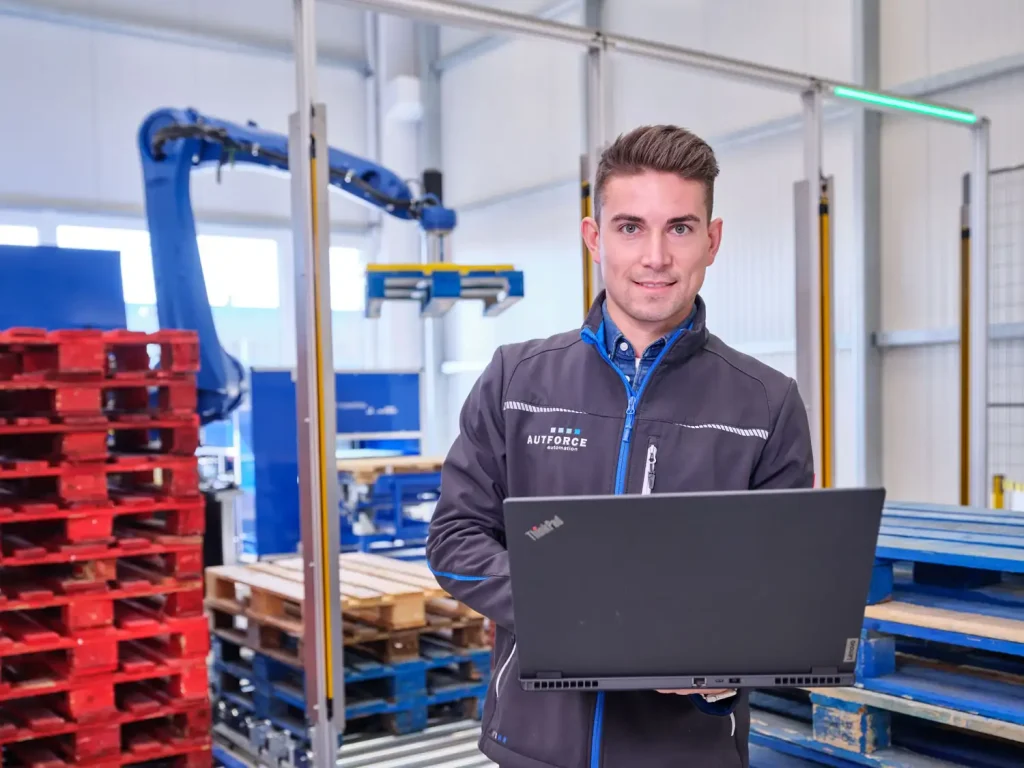
„The system has quickly proven its worth for us in day-to-day operations. It relieves our employees of the physically demanding and monotonous work of pallet sorting and reliably delivers a consistently high sorting quality. At the same time, we remain very flexible despite the automation:
Whether it’s stack heights, pallet classes, or other criteria, adjustments can be made quickly and easily. Another positive aspect is that the system operates quietly and takes up very little space. What impressed us most, however, was our collaboration with the manufacturer. Our requirements were taken seriously from the very beginning, carefully considered together, and incorporated into the implementation.“Nancy Schulz
Project Manager, EDEKA Handelsgesellschaft Minden-Hannover mbH
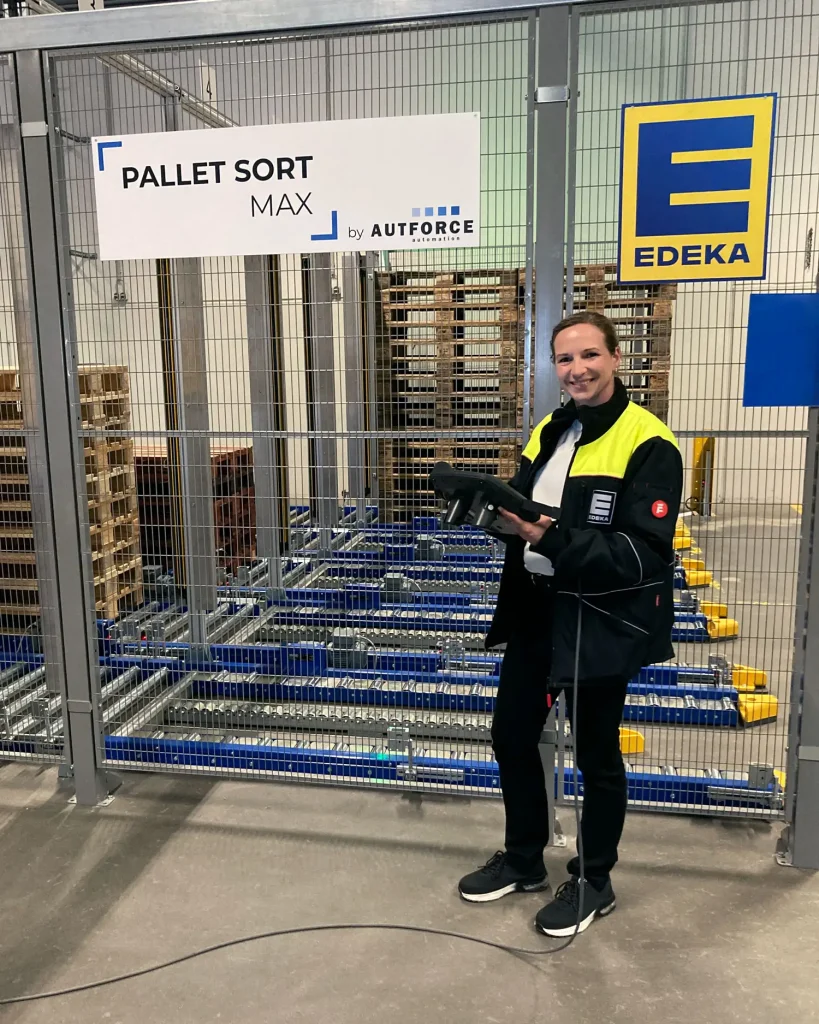
For this specific application and the customer’s individual requirements, our PalletSort Max pallet sorting system proved to be the optimal solution. The system was specifically tailored to the project’s requirements and processes mixed stacks of empty pallets fully automatically. Its primary goal is the reliable separation of different pooling pallets and the assessment of pallet condition based on defined quality criteria. To this end, the pallets go through a systematic process chain: They are separated, inspected, classified, and finally stacked by type to ensure efficient and quality-assured return as part of the pooling process.
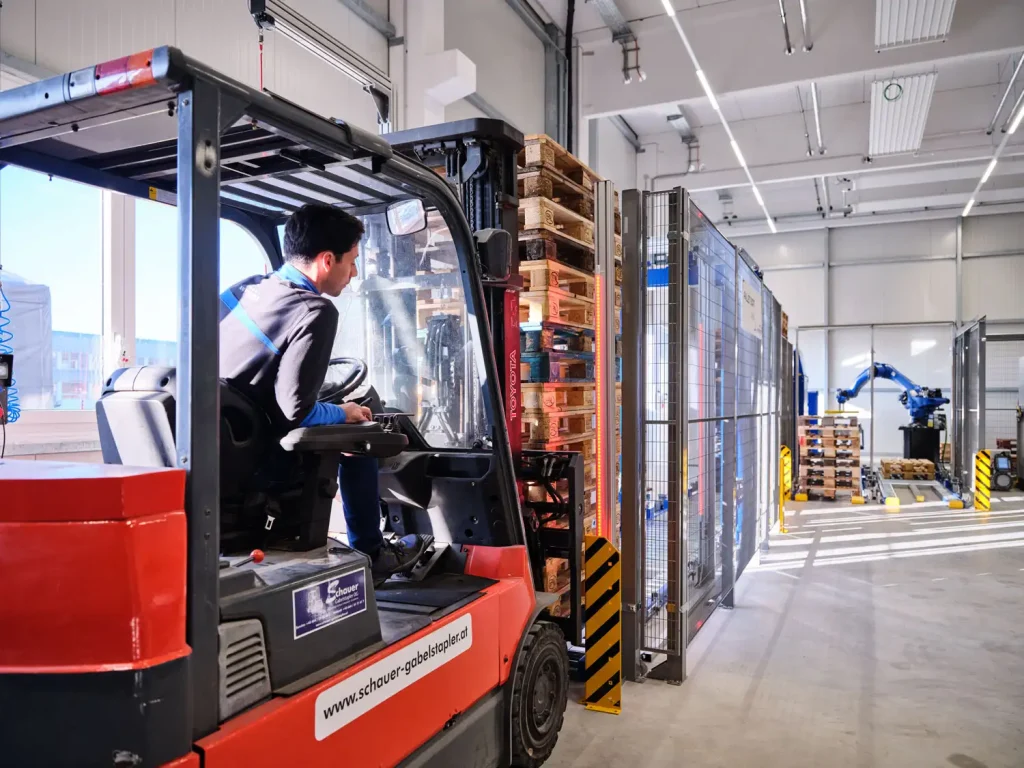
The mixed pallet stacks are loaded at the intake station using a forklift. The station is designed so that a long forklift fork can pick up two pallet stacks at the same time and transfer them to the system in a single step.
The pallets are then fed into the process via an extended conveyor line. This section was deliberately designed as a buffer zone and can accommodate up to 8 pallet stacks prior to separation. This allows the system to be loaded with an appropriate supply and then operate autonomously for an extended period. Additional pallet stacks can be added at any time during operation without interrupting the process.
The pallets are separated using a pallet magazine. A lifting unit picks up the second pallet from the bottom of the stack. The entire stack of pallets is then lifted briefly so that the bottom pallet is released and can roll onto the downstream conveyor in a controlled manner.
As soon as the pallet is removed from the pallet magazine, the pallet stack is lowered again and returned to a stable starting position. This process repeats cyclically until the entire stack has been processed.
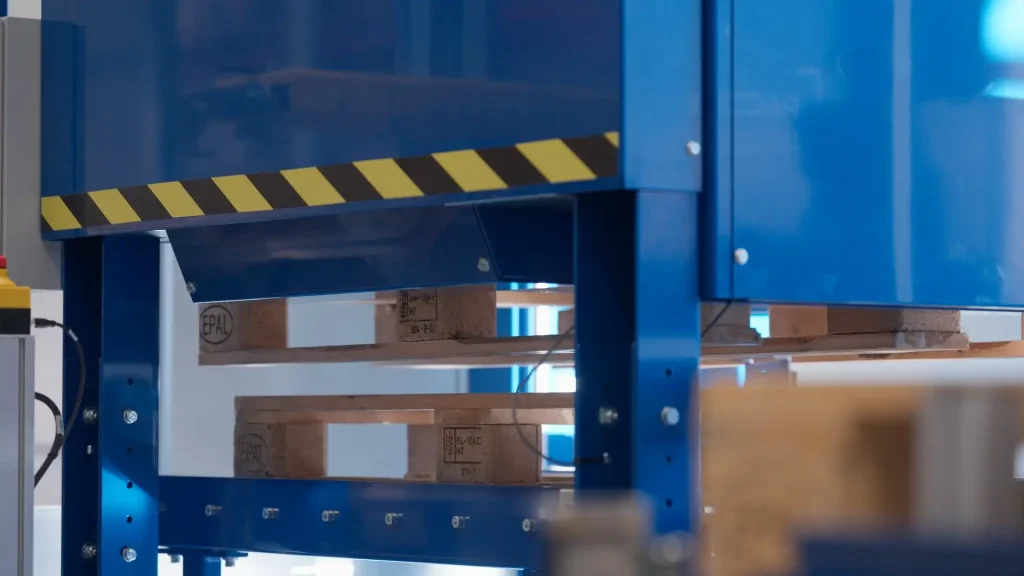
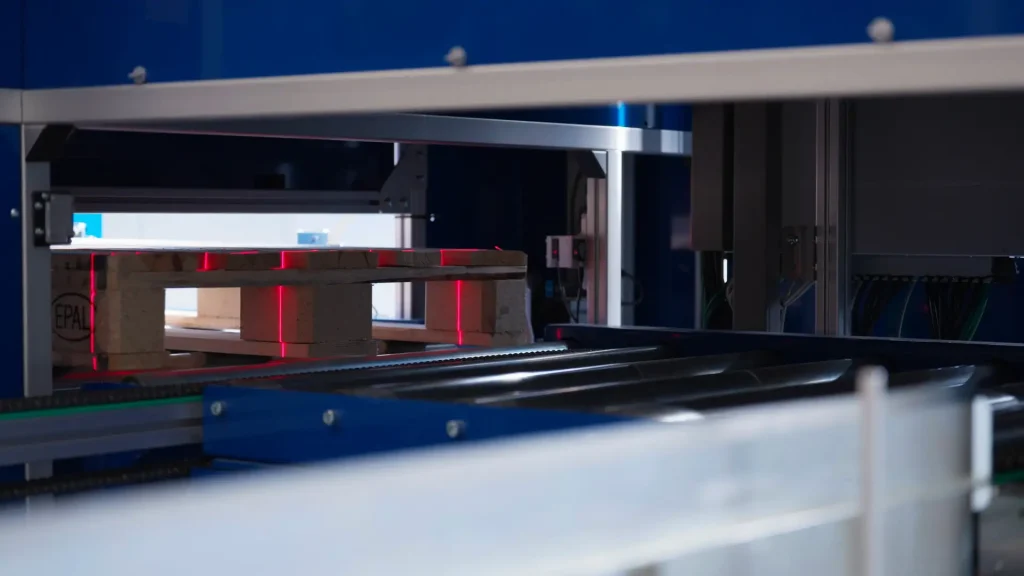
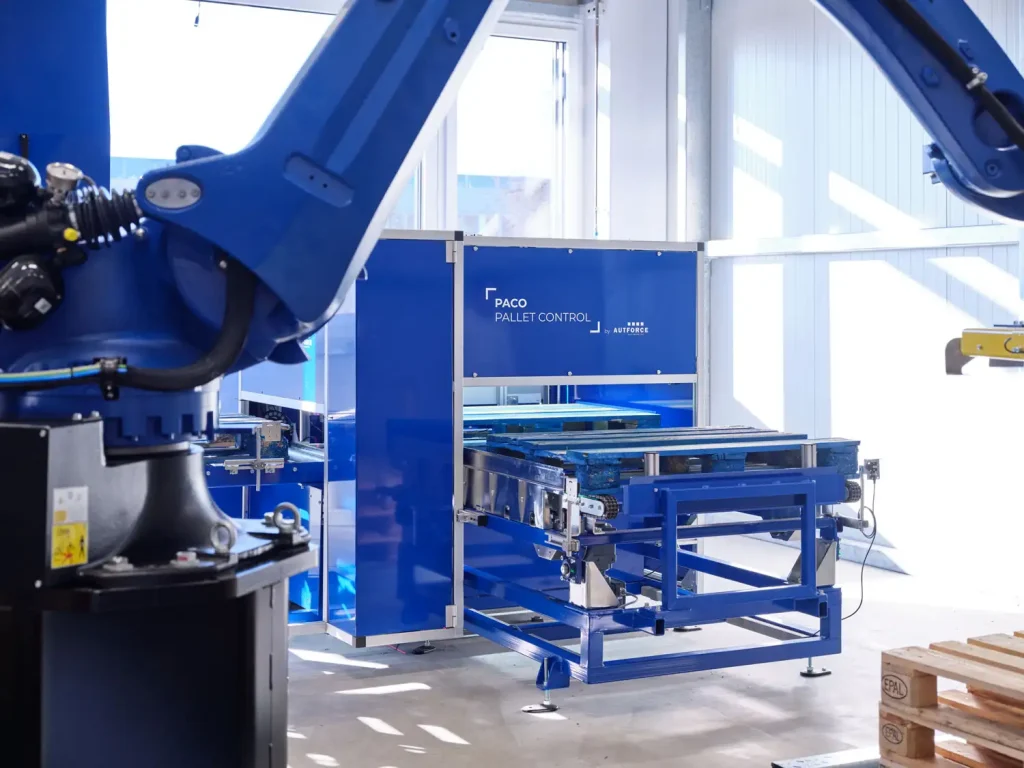
At the PACO inspection station, every pallet is thoroughly inspected. The system combines 3D laser scanners and 2D cameras to reliably capture both geometric properties and visual characteristics. The analysis is based on 3D point clouds and image data captured under controlled, uniform lighting. This ensures consistent and reproducible inspection quality regardless of ambient light or material variations.
The inspection comprises several coordinated sub-areas:
The overall classification of the pallet is based on these individual results. This process determines the defined quality classes—such as EPAL 1A, 2A, and 2B—as well as defect statuses or assignment to CHEP, LPR, and IPP. The evaluation is entirely rule-based and relies on customer-specific threshold values, allowing the system to adapt flexibly to different requirements.
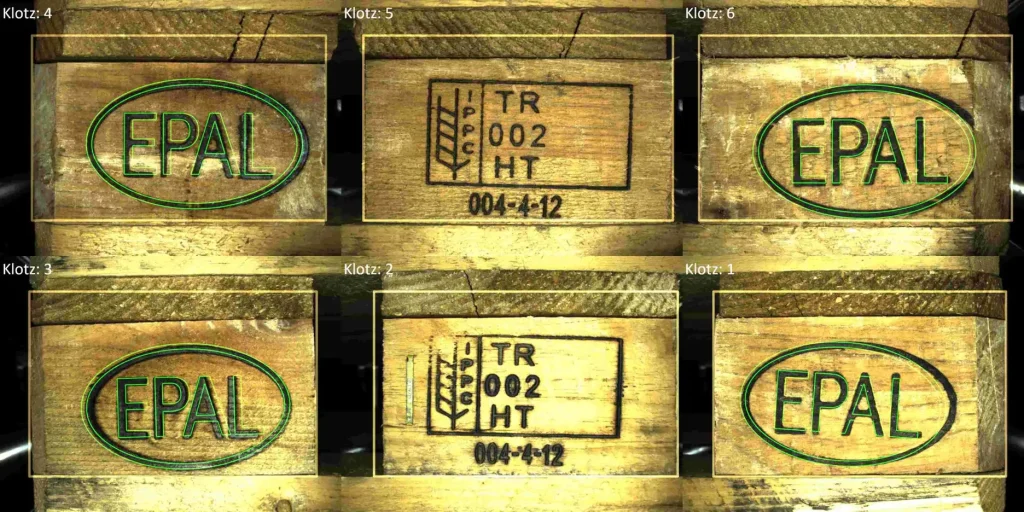
EPAL Type Identification
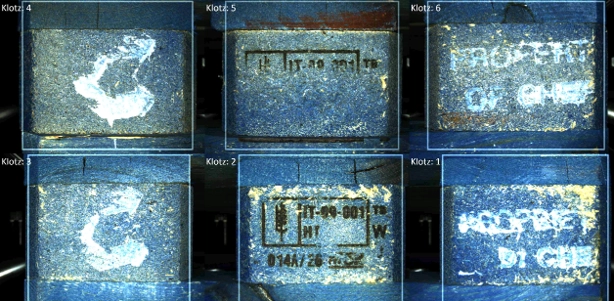
CHEP Type Identification
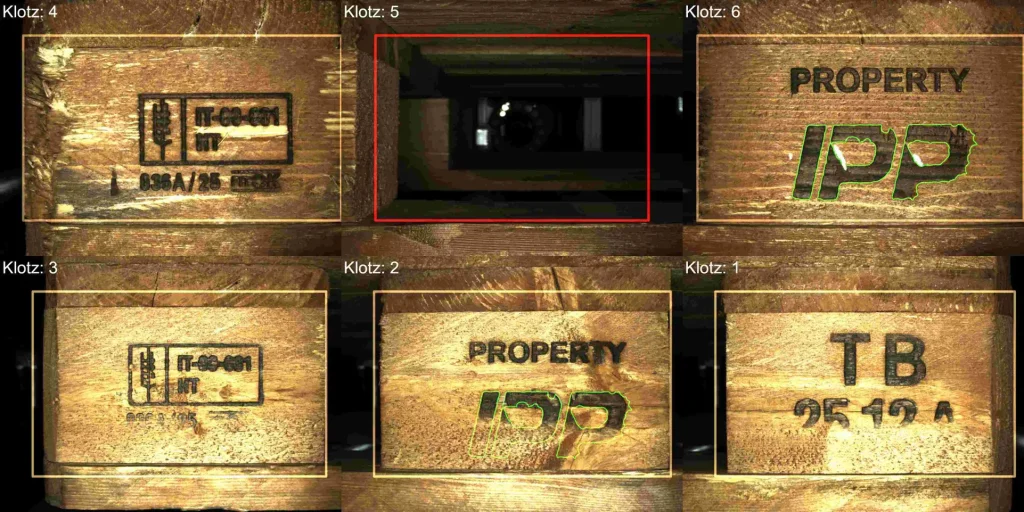
IPP Type Identification
Missing block
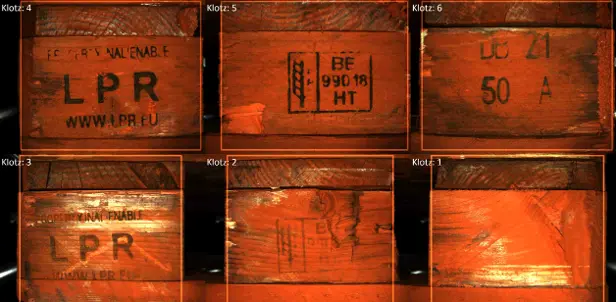
LPR Type Identification
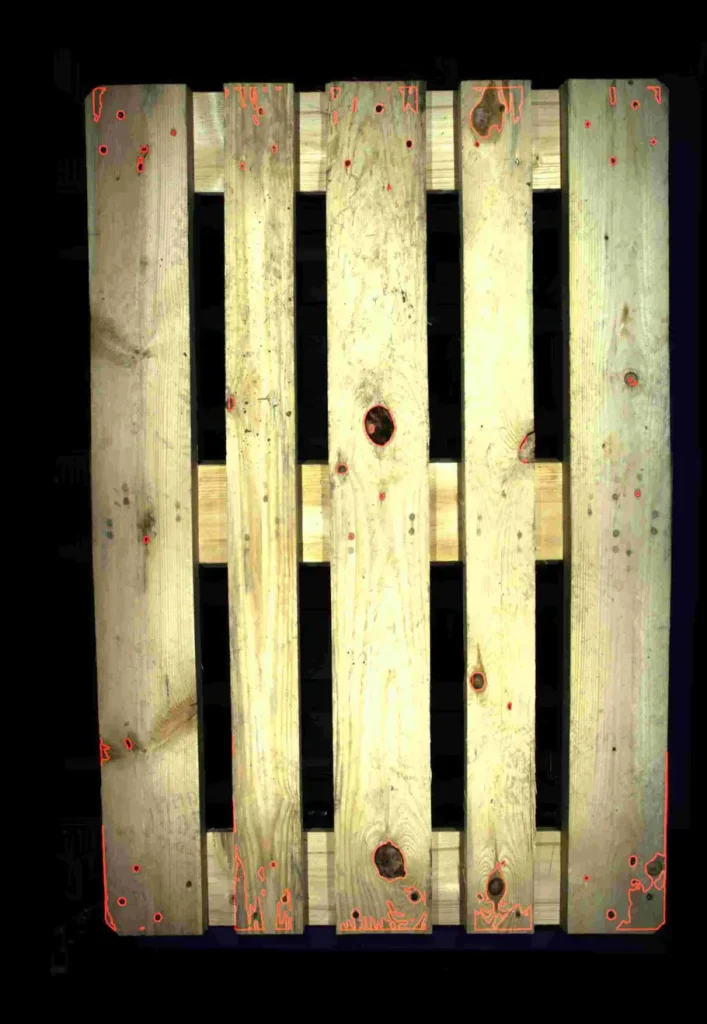
EPAL Surface Inspection

CHEP Surface Inspection
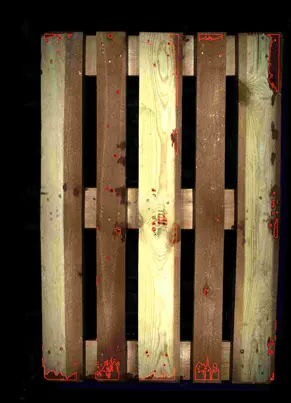
IPP Surface Inspection

LPR Surface Inspection
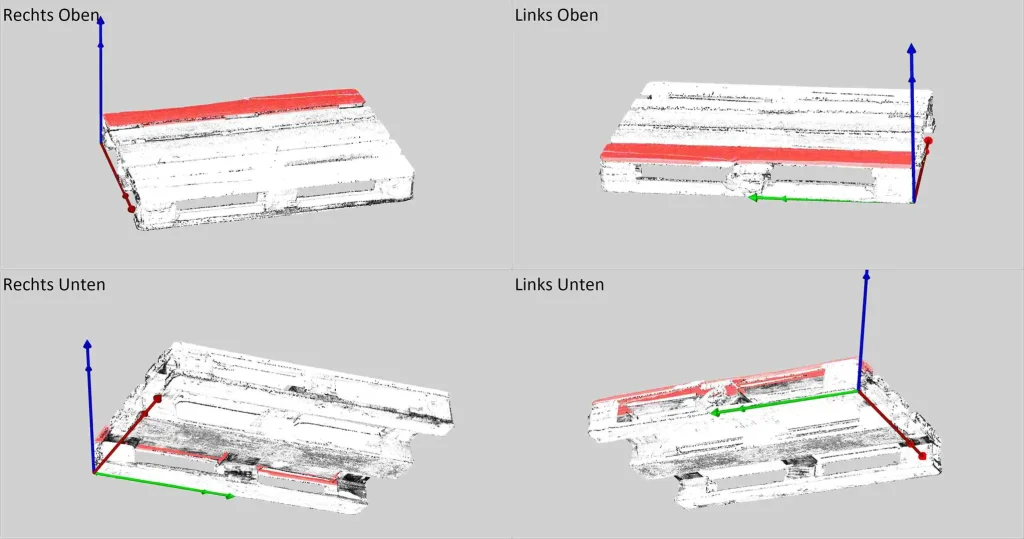
Contour Inspection
Broken Top Board
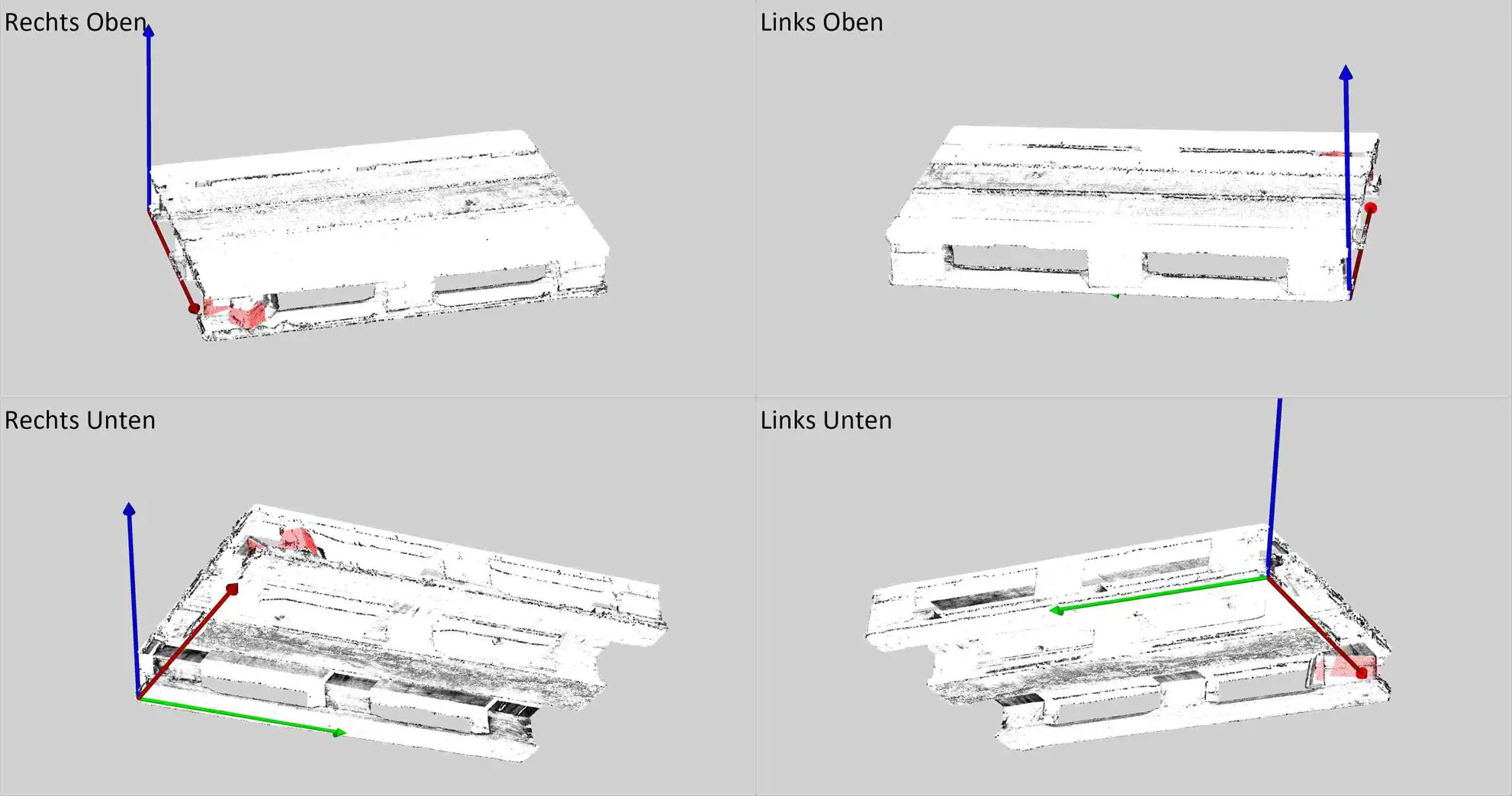
Contour Check
Block is twisted
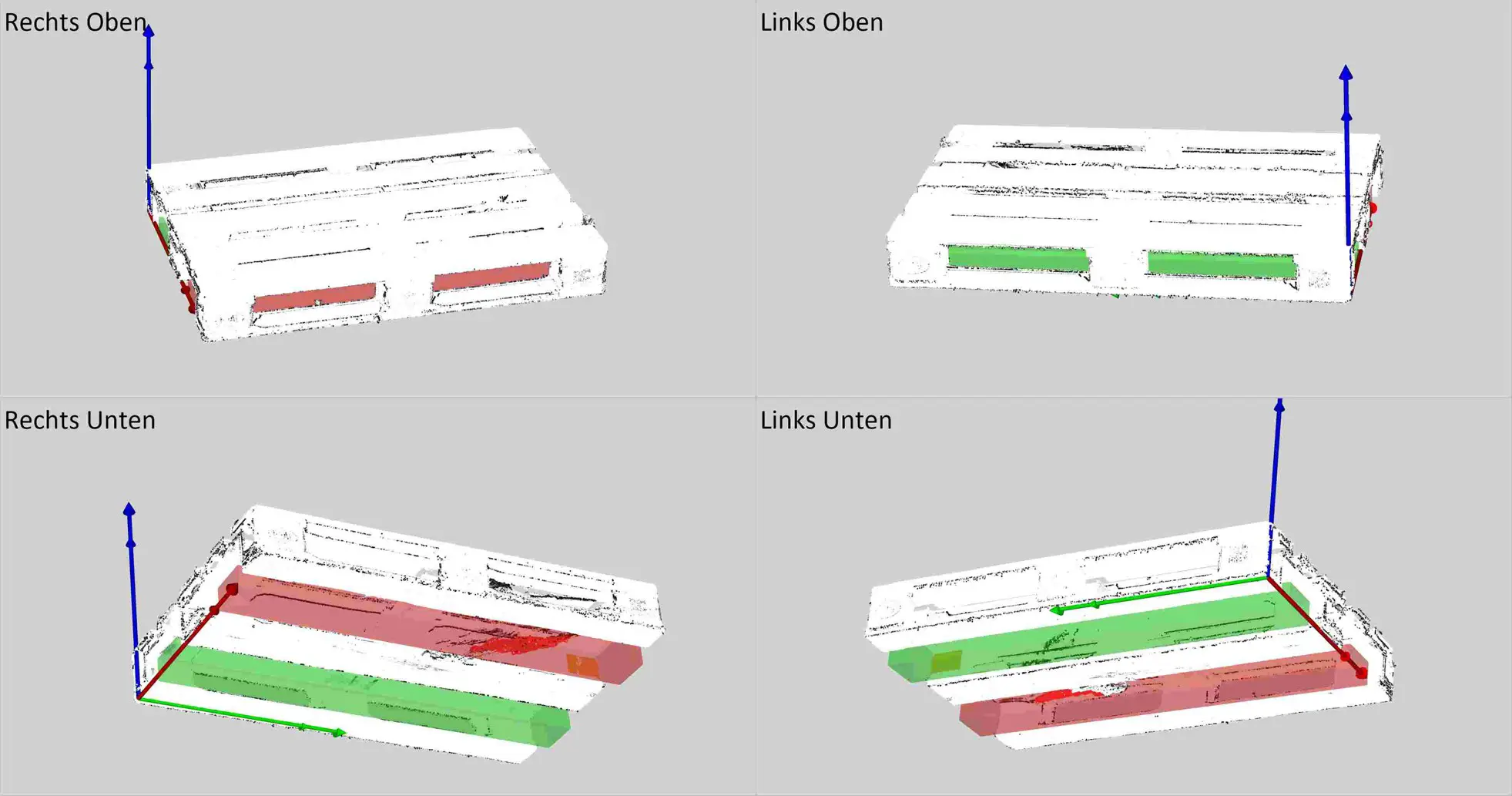
Geometric Inspection
Insufficient fork clearance, film residue
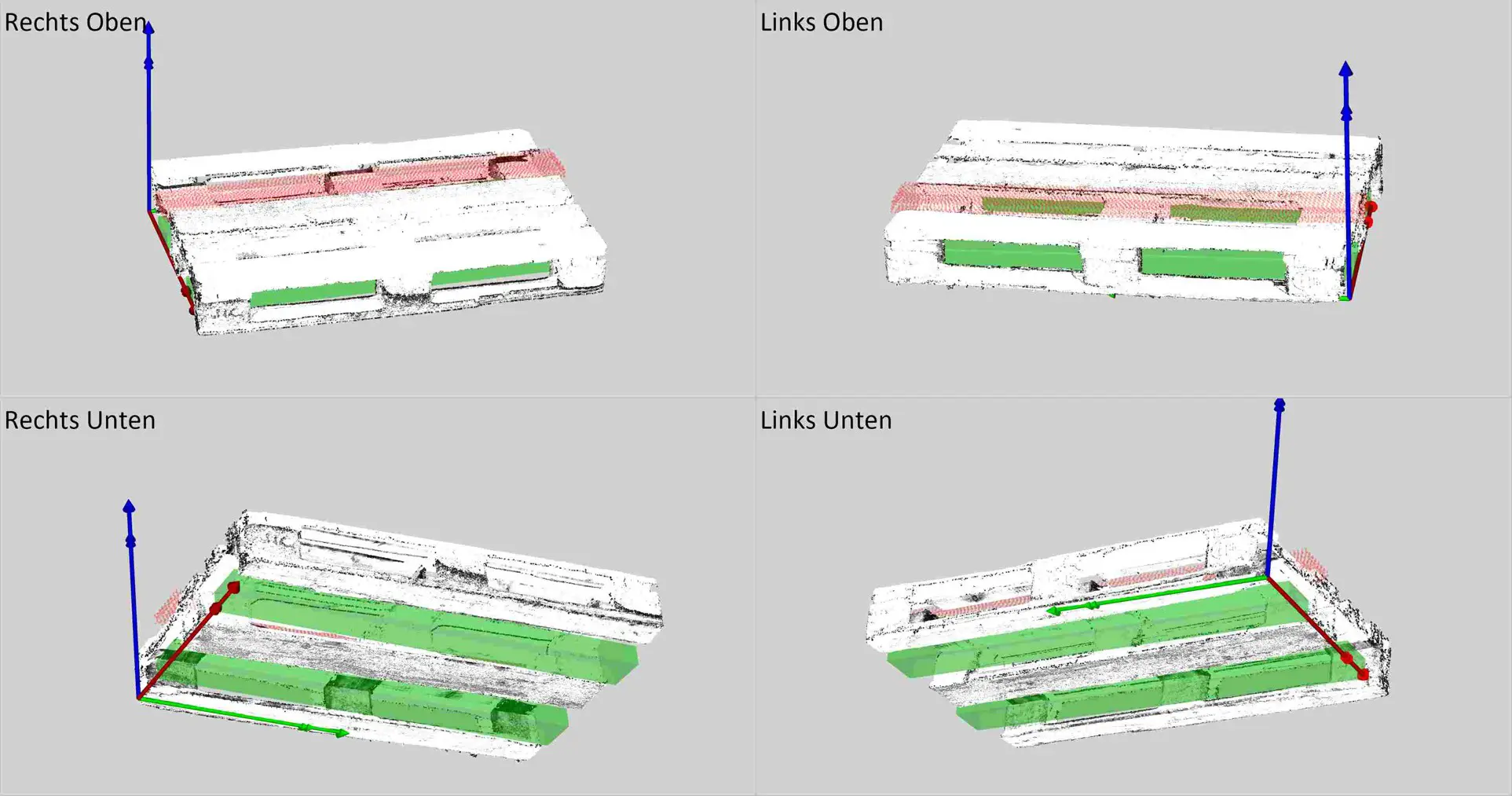
Geometric Inspection
Top board missing
Once the inspection is complete, the determined classification is transmitted to the robot system. The robot picks up the pallet and places it on the corresponding output lane.
The robot-assisted approach allows for the flexible handling of different pallet types and quality classes. This is particularly advantageous for mixed pallet streams with varying distributions of pallet types.
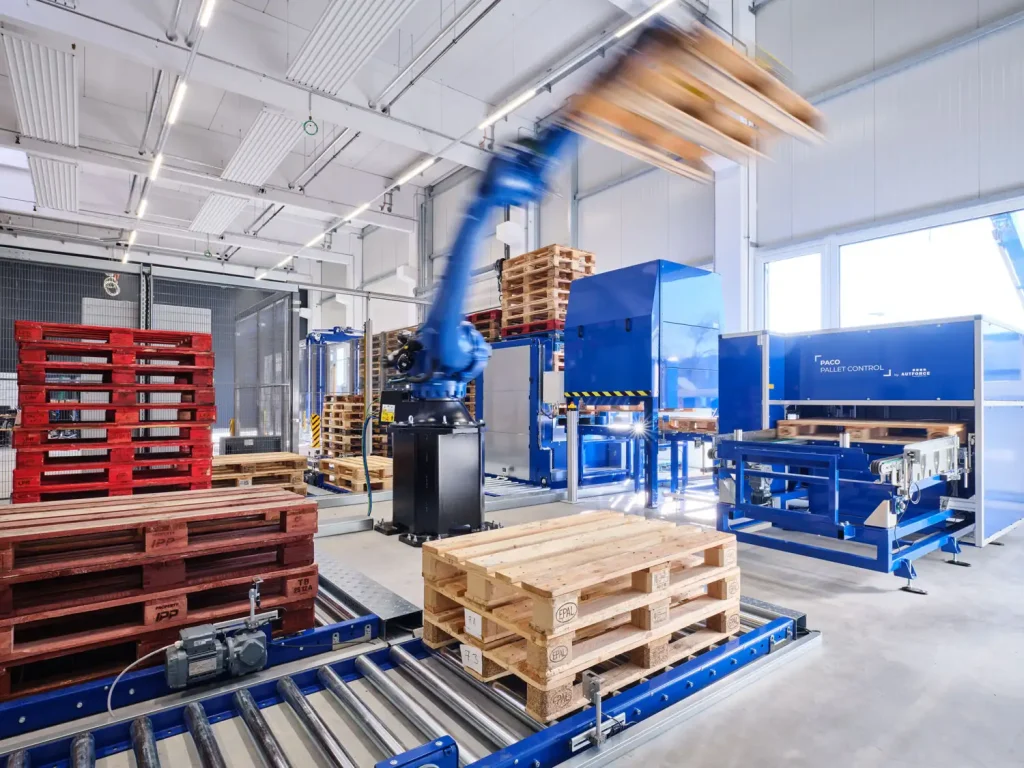
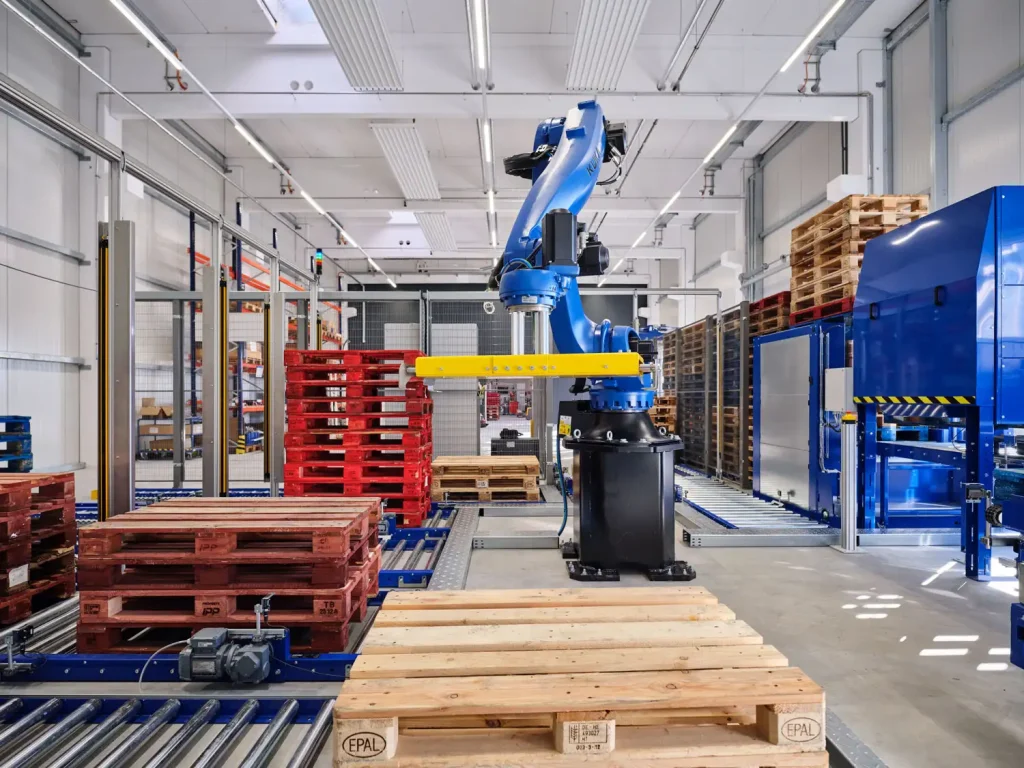
On the seven output lanes, the pallets are reorganized into stacks according to their class. A specific pallet category is assigned to each lane.
As soon as the specified stack height is reached, the stack is automatically made ready for removal. The sorted pallets can then be fed directly into the respective pooling systems or downstream processes.
Contact usautfactory is the integrated software solution that serves as the core of all AUTFORCE pallet sorting machines. It handles the central evaluation, control, and documentation of the entire sorting process. Through the seamless integration of 3D sensors and camera systems, autfactory converts raw data into traceable decisions. All inspection and classification rules are stored here, ensuring that every pallet is evaluated transparently and unambiguously assigned to a quality and type class. Every decision is fully traceable. The software documents which characteristics (e.g., color, geometry, damage) led to the respective classification.
Important features and settings in autfactory:
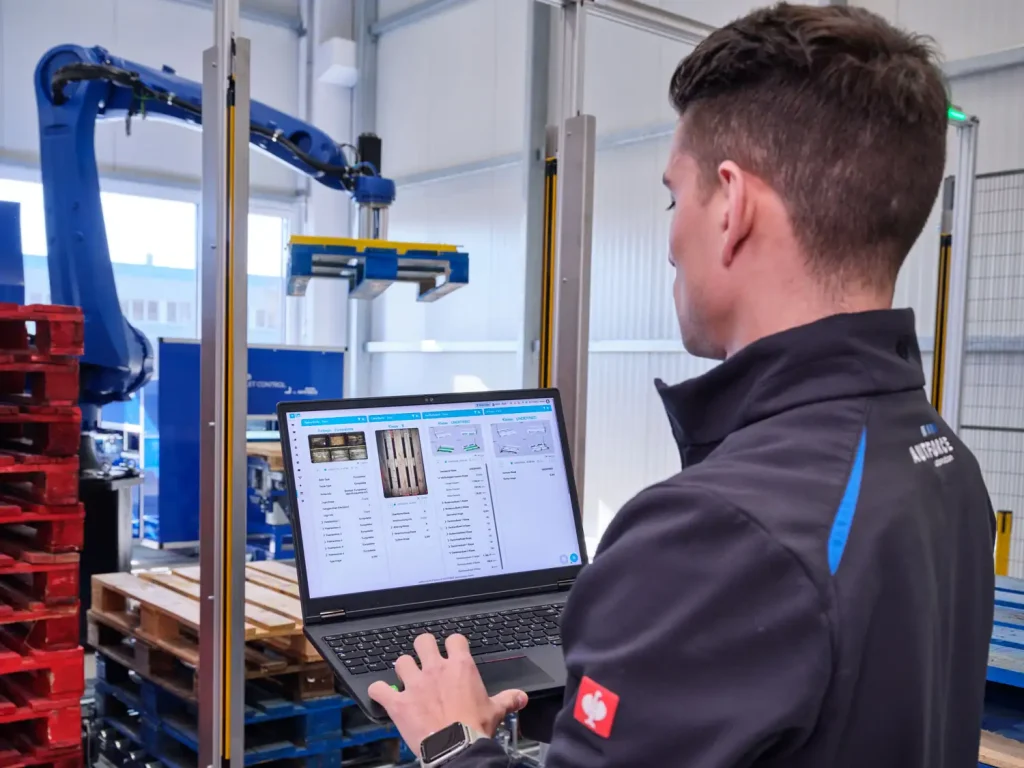
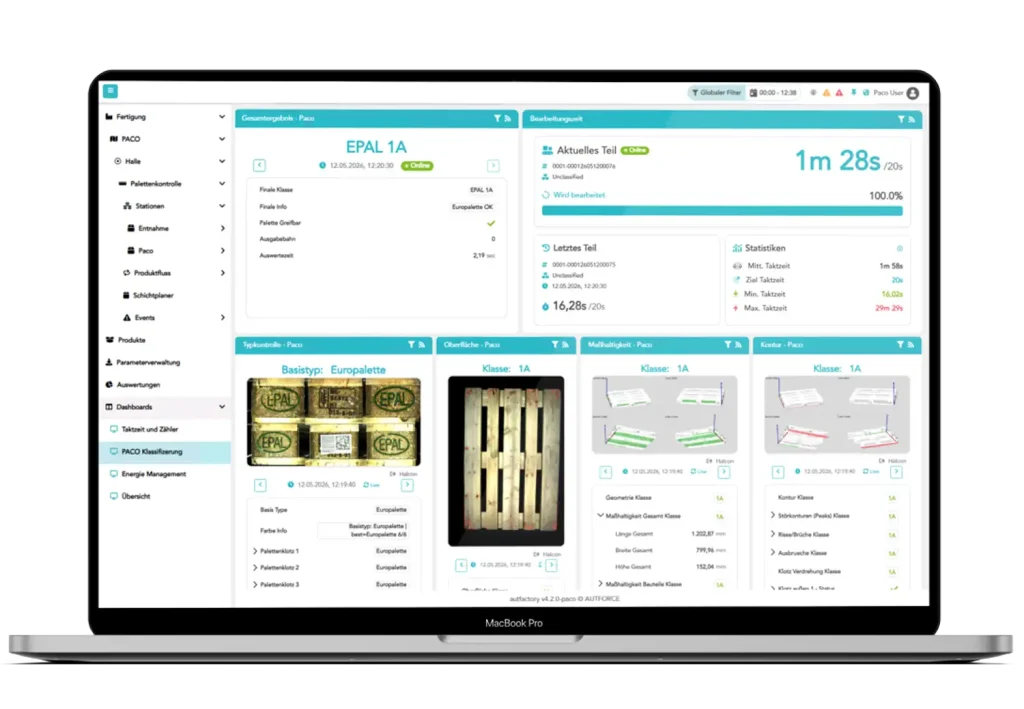

Each pallet is automatically inspected and classified based on defined criteria.

Up to 200 pallets are inspected, sorted, and restacked per hour.

Inspection criteria, quality classes, and sorting logic can be adjusted at any time using the software.

All test results and classification decisions are fully traceable.
At AUTFORCE, we specialise in testing systems and industrial software. Get in touch with us. Together we will find the best solution for your project!
Christian Hanbauer
Expert Test Systems
+43 (664) 88 71 02 50
[email protected]
Get a non-binding initial assessment now:
You are currently viewing a placeholder content from reCAPTCHA. To access the actual content, click the button below. Please note that doing so will share data with third-party providers.
More Information